NYC METAL PANELSFIVE BOROUGHS · FABRICATE · INSTALL (home) Call or text (929) 209-3122 Free estimate

Envelope waterproofing · Five boroughs

Facade waterproofing, air barriers and sealant work in NYC

Air and water barriers behind metal panels, silicone wet-seal joints, metal transitions, and elastomeric or breathable wall coatings installed by one crew.

Call or text (929) 209-3122

Book spring work now. Winter assessments and estimates available.

Updated November 2026

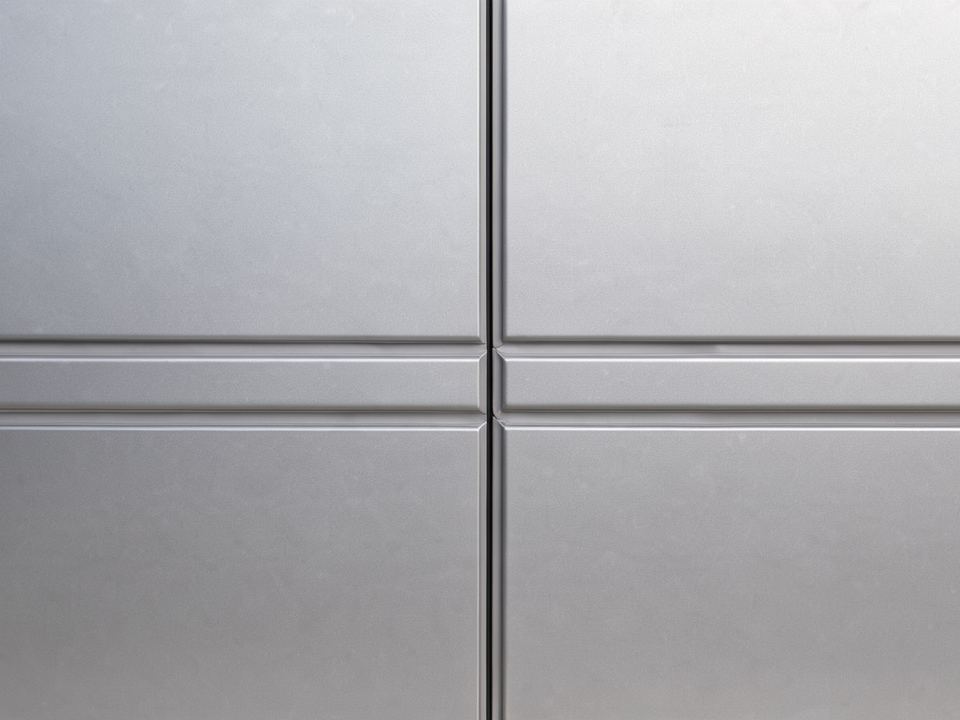
AI-generated illustration: a wet-seal ACM joint with backer rod and silicone sealant

AI-generated illustration

AI-generated illustration: backer rod and silicone sealant joint between commercial metal wall panels

Short answer

We install commercial facade waterproofing across all five boroughs, either paired with our metal wall panel packages or priced as a standalone exterior scope. Work covers fluid-applied and sheet air and water barriers behind rainscreen cladding, backer rod and silicone sealant joints, sheet-metal transitions, and breathable facade coatings. Send drawings or wall photos for pricing.

Key facts

Service area
All five boroughs of New York City: Manhattan, Brooklyn, Queens, the Bronx and Staten Island.
Season
Panel installation runs most of the year. Sealant joints and barrier work are done on dry, frost-free surfaces.
Who does the work
Our own crews, from The Dom Construction Group LLC.
Insurance
General liability, umbrella and workers' compensation insurance; certificates on request.
Estimates
Free. Start with 3–5 photos by text, or use the form.
Reply
We reply within one business day, Monday to Friday.

Putting the barrier and the cladding under one trade

On modern commercial facades across New York City, the outer metal panel is rarely the only line of weather defense. Behind an open-joint or dry-joint rainscreen system, the air and water-resistive barrier over exterior sheathing stops bulk water and air leakage, and that membrane is penetrated hundreds of times by sub-framing clips, Z-girts, and hat channels. When one trade applies the barrier and a separate trade drills into it weeks later to hang metal wall panels, split responsibility invites leaks and schedule delays.

Before sub-framing and continuous insulation go up, our crew details rough openings with compatible transition strips, seals clip bases and fastener penetrations as specified on the project drawings, and checks membrane continuity at floor lines, inside corners, and soffit returns.

NYC Metal Panels eliminates trade handoffs by installing fluid-applied or sheet air and water barriers, transition flashings, and panel cladding with our own crew. General contractors, construction managers, and building owners in Manhattan, Brooklyn, Queens, the Bronx, and Staten Island also hire us for standalone facade waterproofing, joint recaulking, and wall coating packages.

Sealant joints at wet-seal panels and facade transitions

Even on tight shop-fabricated facades, long-term weather performance depends on joint preparation and sealant geometry:

  • Wet-seal metal panel reveals: Route-and-return ACM panels and solid plate panels in barrier configurations typically use roughly 1/2-inch joints backed by closed-cell or soft-rod backer rod to maintain an hourglass sealant profile without three-sided adhesion.
  • Dissimilar material perimeters: Expansion and perimeter joints where metal cladding meets aluminum storefront, curtain wall mullions, brick masonry, EIFS, or stucco require compatible primers and non-staining low-modulus silicone so movement does not tear the bond line.
  • Cut-out and recaulking on existing buildings: On weathered commercial elevations, we slice out hardened or split sealant, clean joint substrates back to bare metal or sound masonry, mask factory PVDF panel faces to keep finishes clean, and tool fresh sealant joints.

Thru-wall metal flashings, copings and breathable coatings

Water that enters a parapet top, louver perimeter, or window head quickly tracks behind insulation and wall framing. Our exterior waterproofing scope covers sheet-metal head and sill flashings, drip edges, receiver reglets, transition membranes at rough openings, and sealed lap joints under metal parapet copings.

On porous masonry, cement stucco, and aged EIFS elevations, we also clean substrates and apply breathable architectural or elastomeric wall coatings that bridge hairline crazing while allowing trapped interior vapor to escape. We limit our work strictly to vertical walls, parapets, soffits, and facade transitions—not flat roofing or roof membrane replacement.

Waterproofing crew experience and NYC site access

Our field team brings about 19 years of experience in coatings, masonry, EIFS, and stucco alongside our commercial wall panel operations. Every crew works directly for The Dom Construction Group LLC, backed by general liability, umbrella, and workers' compensation insurance (certificates furnished on request) and registration on the New York State public work contractor registry.

Serving the five boroughs from our Albany office, we work from boom or scissor lifts where street frontage allows, or set our own company-owned supported pipe scaffold on tight lots and rear courtyards. Send elevation drawings or close-up joint photos through our bid request page, or call (929) 209-3122 for a free estimate.
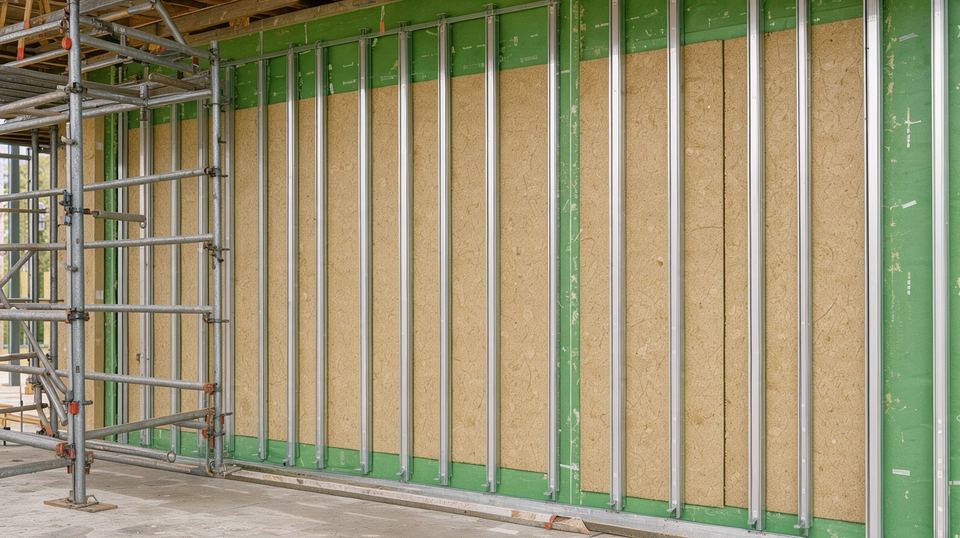
AI-generated illustration: metal girts and clips over an air and water barrier, ready for panels

AI-generated illustration

AI-generated illustration: air and water barrier with sub-framing girts mounted before panel installation

Where facade water leaks start on NYC buildings

Four envelope failure points we routinely find behind commercial metal panels, masonry, and plaster elevations.

Split or hardened wet-seal panel joints

Gaps along the folded return edge or down the center of sealant reveals between metal panels.

Usually means
Aged urethane sealant, missing backer rod causing three-sided adhesion, or unprimed metal edges.
What we do
Cut out failed sealant cleanly, mask PVDF panel faces, set proper closed-cell or soft-rod backer rod, prime if specified, and tool fresh low-modulus silicone.

Leaks at storefront and window perimeters

Interior water staining at jambs and sills where metal cladding or stucco meets aluminum framing.

Usually means
Missing sill pan end dams, unsealed rough-opening transition membranes, or torn perimeter caulk.
What we do
Open the perimeter joint, install compatible transition flashing or head drip detail where accessible, and reseal with backer rod and silicone.

Unsealed sub-framing penetrations

Moisture tracking into exterior gypsum sheathing behind open-joint rainscreen facades.

Usually means
Z-girts or clip fasteners driven directly through the air and water barrier without compatible sealant or gasket isolation.
What we do
Apply specified fluid-applied or self-adhered membrane detailing and seal clip bases and fastener penetrations before closing the cavity.

Open parapet coping laps and chalked walls

Dark vertical streaks below parapet caps and damp hairline crazing across older stucco or EIFS bays.

Usually means
Separated sheet-metal coping splice plates, missing thru-wall flashing, and weathered wall coatings.
What we do
Reseal or re-flash coping splice joints, repair damaged substrate areas, and apply a breathable elastomeric or mineral facade coating.

Facade waterproofing and air barrier questions

Why pair the air and water barrier with the metal wall panel subcontract?

Behind an open-joint or dry-joint rainscreen system, the air and water-resistive barrier on the exterior sheathing is the primary weather plane, and every sub-framing clip or girt fastener penetrates that membrane. Putting the barrier, rough-opening flashings, sub-framing, and cladding under one exterior subcontractor prevents trade handoff gaps, missed fastener seals, and warranty finger-pointing if water ever tests an elevation.

What sealant type is used in wet-seal metal wall panel joints?

Commercial wet-seal ACM and plate panel joints—typically spaced around 1/2 inch wide—are closed with cylindrical backer rod and low-modulus, neutral-cure architectural silicone sealant. Backer rod sets the proper sealant depth and prevents three-sided adhesion at the back of the reveal, while non-staining silicone formulations accommodate thermal expansion of aluminum trays without streaking adjacent PVDF finishes or stone.

How do breathable facade coatings differ from standard exterior paint?

Standard exterior house paints form a thin film that can blister when moisture vapor pushes outward from masonry, stucco, or EIFS walls, and they crack as soon as hairline substrate crazing moves. Commercial breathable elastomeric and mineral facade coatings build a thicker weather-shedding membrane that bridges minor surface hairline cracks while remaining vapor-permeable so interior wall moisture can escape.

Does your waterproofing scope include flat roofs or roof membranes?

No. Our waterproofing work is strictly vertical facade and building-envelope scope: fluid-applied and sheet air and water barriers behind cladding, rough-opening and thru-wall flashings, parapet coping transitions, wet-seal panel joints, perimeter caulking at windows and storefronts, and breathable wall coatings. Low-slope roof membranes, roof tear-offs, and below-grade foundation tanking remain with roofing and site trades.

How do you protect finished metal panels during joint recaulking?

When cutting out failed sealant on existing commercial panels, mechanics use controlled utility blades and non-marring scrapers so the factory PVDF coating along the folded return edge is never gouged down to bare aluminum. Both edges of every reveal are taped cleanly before priming and gunning fresh silicone, and masking tape is pulled immediately after tooling before skinning begins.

Get pricing on air barriers, sealants or coatings

Share wall details, elevation drawings, or close-up photos of failed joints and transitions.

Rather text? Text photos to (929) 209-3122

What are you seeing? (optional)
Add details (optional)
Property (optional)
How soon? (optional)
Best way to reply (optional)
Photos (optional, up to 5)

Add 3–5 photos: one close-up and one of the whole wall. We shrink them before sending.

    required. We reply within one business day, Monday to Friday. We use your details only to reply to this request. Privacy

    Rather text?

    (929) 209-3122

    Call or text Monday–Friday, 7 AM–5 PM.

    Envelope trades that tie into waterproofing

    Need one subcontractor for barrier and cladding?

    Book spring work now. Winter assessments and estimates available.