Shop fabrication · Built to shop drawings
Metal wall panel shop fabrication
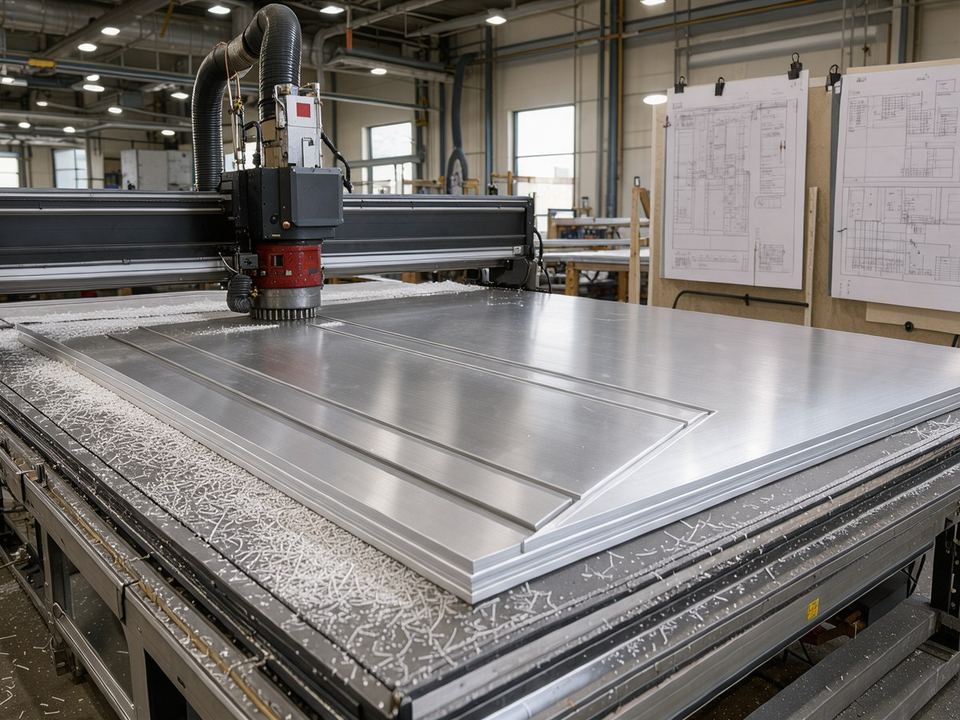
CNC-routed, folded and assembled ACM and aluminum wall panels built strictly to your approved shop drawings and crated in installation order for five-borough deliveries.
Call or text (929) 209-3122
Book spring work now. Winter assessments and estimates available.
Updated November 2026
AI-generated illustration
Short answer
Our shop fabricates ACM and formed metal wall panels from approved shop drawings for New York City commercial buildings. We CNC-route return grooves, fold crisp panel trays, fasten corner clips and perimeter extrusions, bond back stiffeners where spans require them and ship labeled crates with protective film intact. Contractors can order fabrication alone or pair it with our field crew.
Key facts
- Service area
- All five boroughs of New York City: Manhattan, Brooklyn, Queens, the Bronx and Staten Island.
- Season
- Panel installation runs most of the year. Sealant joints and barrier work are done on dry, frost-free surfaces.
- Who does the work
- Our own crews, from The Dom Construction Group LLC.
- Insurance
- General liability, umbrella and workers' compensation insurance; certificates on request.
- Estimates
- Free. Start with 3–5 photos by text, or use the form.
- Reply
- We reply within one business day, Monday to Friday.
How route-and-return panels take shape in the shop
Flat composite and aluminum sheets—commonly stocked up to 60 inches wide and in extended architectural lengths—turn into rigid facade cassettes through precision CNC routing and folding. Working directly from the project's approved shop drawings, our shop programs each panel blank on a flatbed CNC router or panel saw so reveal lines, return depths and attachment holes match the elevation layout.
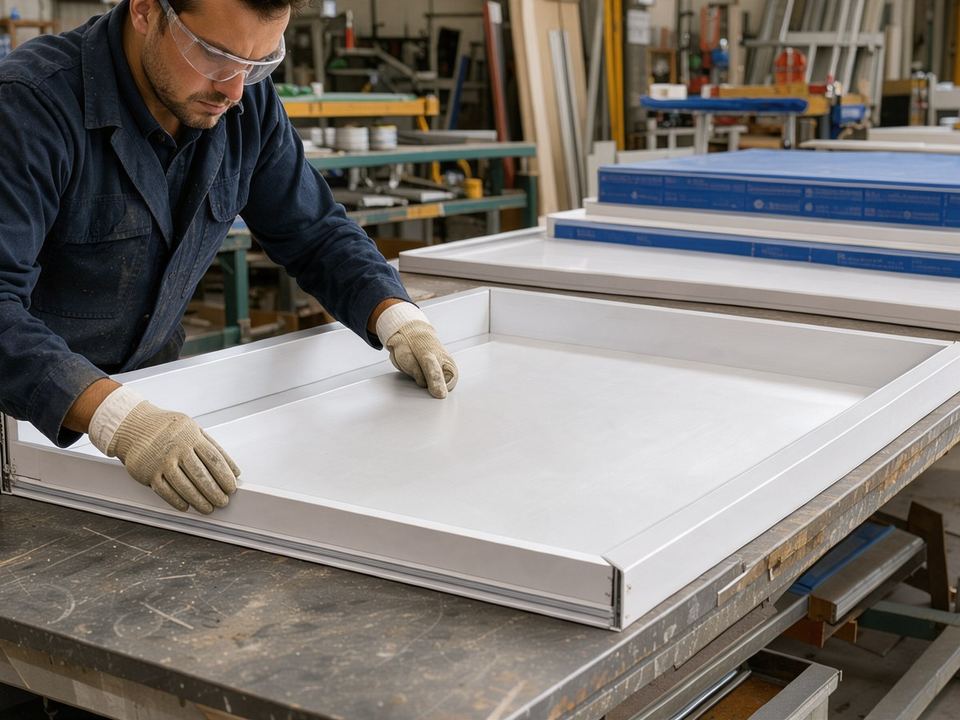
To form a route-and-return tray on ACM panels, the router cuts a V-shaped or U-shaped groove through the back 0.020-inch aluminum skin and nearly all of the mineral or polyethylene core, stopping just behind the front aluminum skin and its factory PVDF coating. Technicians then fold the perimeter flanges inward by hand or press brake to create crisp 1-to-2-inch returns without cracking the painted exterior face. For solid aluminum plate panels, blanks are sheared or routed and formed on press brakes to exact flange angles.
Corners, extrusions, stiffeners and protective film
Once returns are folded, each cassette is reinforced so it hangs flat and resists wind loads on the building:
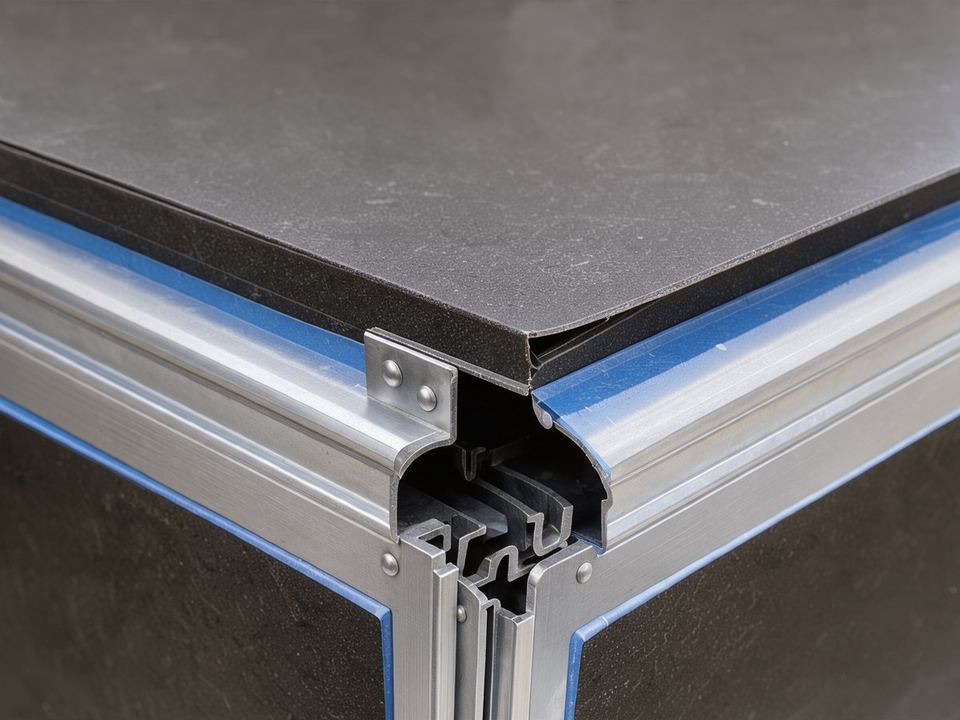
- Closed corners: Return miters are locked together with internal aluminum corner angles, structural rivets or mechanical clips to keep corners square during shipping and hanging.
- Perimeter extrusions and clips: Continuous aluminum extrusions or hook-on receiver clips are fastened along the panel returns to match either a wet-seal track or a dry-joint rainscreen rail system.
- Back stiffeners: Wide or tall panel modules receive aluminum stiffener channels bonded to the rear skin with structural adhesive and tape, preventing face deflection and oil-canning.
- Finish orientation and film: Factory peel-off film stays intact throughout shop handling, with directional arrows preserved on metallic, mica and brushed coatings so every cassette faces the same grain direction on the wall.
Working from approved shop drawings and field dimensions
We do not stamp, test or engineer facade assemblies in-house. Every cut sheet and extrusion layout follows the project's engineered, architect-approved shop drawings and the panel manufacturer's tested assembly requirements. Where existing masonry or steel framing varies on a New York City re-clad, fabricating in sequenced batches lets field dimensions from verified control lines feed into final corner, jamb and coping panels before those pieces are cut.
Crating and sequencing for tight city deliveries
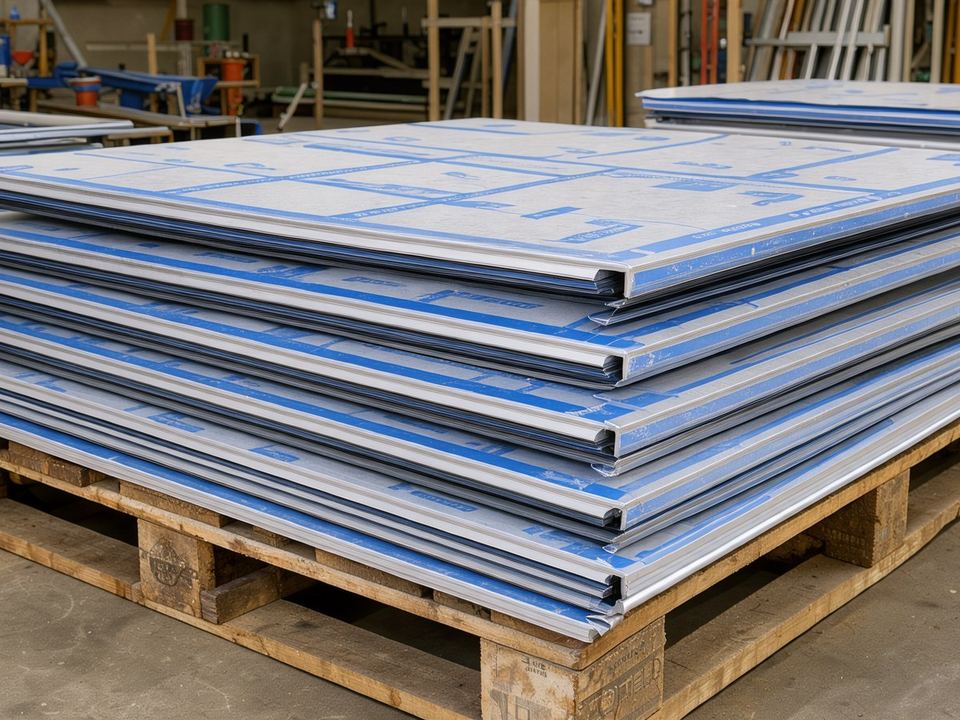
Five-borough jobsites rarely have room to store twenty crates of cladding on the sidewalk. Every finished panel is labeled on its protective film and return flange with its shop-drawing mark, elevation and grid location, then interleaved with foam or cardboard protection and stacked into timber crates by installation zone.
General contractors and facade installers can order shop fabrication as a standalone material-and-fab package or combine it with field installation by our own crews. Send your architectural elevations, Division 07 specifications or approved shop drawings through our bid request page or contact form for free pricing.
Shop fabrication sequence from sheet stock to crate
Every tray is cut and assembled directly from your architect-approved, engineered shop drawings.
CNC programming and nesting
Approved shop-drawing cut sheets are nested onto flat sheets while tracking metallic or brushed finish grain direction.
Routing return grooves and perimeter cuts
Flatbed CNC routers cut panel perimeters and V- or U-grooves through the back skin and core without marking the front PVDF skin.
Folding trays, corners and stiffeners
Returns are folded to 1 to 2 inches, corners are locked with angles and rivets, perimeter extrusions go on and wide backs receive bonded stiffeners.
Labeling, film check and zoned crating
Each cassette is marked with its elevation grid tag, checked for intact protective film and stacked into crates sequenced by installation drop.
Inside the panel fabrication workflow
AI-generated illustration
AI-generated illustration
AI-generated illustration
Panel shop fabrication questions
What does route-and-return mean in ACM fabrication?
Route-and-return is the shop method that turns flat composite sheets into rigid three-dimensional wall cassettes. A CNC router mills a V- or U-shaped groove through the rear aluminum skin and most of the inner core while leaving the painted front aluminum skin unbroken, allowing crisp 1-to-2-inch perimeter flanges to fold cleanly.
Why do large metal panels need stiffeners on the back?
Wide or tall wall cassettes face wind pressure and suction cycles that can flex unsupported sheet metal and create visible surface waviness known as oil-canning. Bonding structural aluminum stiffener channels to the rear skin with high-strength tape and structural adhesive keeps large panel faces flat without visible face fasteners.
Why does grain direction matter when cutting metallic or mica panels?
Metallic, mica, brushed and anodized-look coil coatings contain directional flakes or surface grain that reflect daylight differently depending on orientation. If adjacent cassettes are rotated during cutting or hanging, one panel will look noticeably lighter or darker on the facade, so fabricators preserve the directional arrows printed on the protective film.
How are fabricated panels packed to prevent damage in transit?
The factory peel-off film stays on every coated face throughout routing, folding and hardware assembly. Finished cassettes are marked on the film and return flange with their shop-drawing elevation tag, cushioned with foam or cardboard interleaving, and stacked inside custom timber crates sequenced to match the field installation order.
Price a fabrication-only or full panel package
Send approved shop drawings, panel cut lists or architectural elevations for free fabrication pricing.
Field installation and panel options
- Field panel installation
Pair our shop-built crates with our NYC installation crew.
- ACM wall panels
4 mm composite cassettes with FR or PE cores as specified.
- Solid aluminum plate panels
Single-skin 0.080 to 0.125 in plate cladding, column wraps and copings.
- GC bid request
Submit Division 07 specs and drawings for commercial takeoff.
Need panel trays cut, folded and shipped to your crew?
Book spring work now. Winter assessments and estimates available.